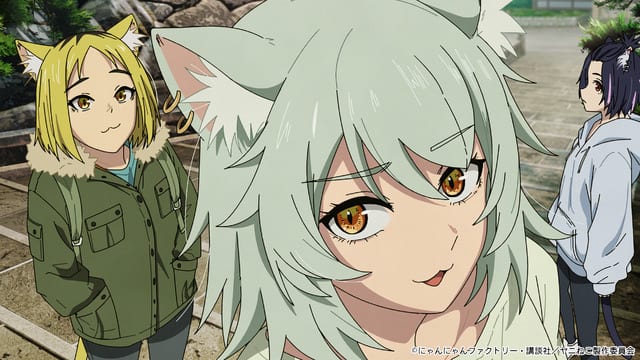
TV anime Yani Neko has wrapped its 12-episode run. Since its July premiere, the show’s gloriously aimless chain-smoking cats kept viewers entertained week after week — from the surprise appearance of Kago Ai in episode 10, to the swapped OP/ED singers in episode 11, to the all-cast chorus version of the opening theme that closed out the finale. But amid all the chaos, one element deserves a closer look: the music.
Who Is Suzuki Keiichi?
The composer behind Yani Neko‘s entire musical world is Suzuki Keiichi (鈴木慶一) — a figure whose career is so vast it could fill several books. Born in Tokyo in 1951, he began his musical life in the 1960s, supporting artists like Agata Morio and Happy End and participating in countless recording sessions.
In the 1970s he co-founded Hachimitsu Pai, one of the pioneering bands in Japanese-language rock. After the group disbanded, he formed Moonriders, debuting with the album Hinotama Boy in 1976. The band has remained active ever since, making it one of the longest-running major-label rock acts in Japan.
Alongside Moonriders, Suzuki has collaborated widely — with Takahashi Yukihiro (YMO) in the duo THE BEATNIKS, with Agata Morio, PANTA of Zunou Keisatsu, and playwright-musician Keralino Sandrovitch, among many others. His output spans rock, pop, traditional Japanese song styles, enka, and commercial jingles.
MOTHER, Kitano Takeshi, and Anime
Suzuki’s profile in screen and game music is equally impressive. His scores for Nintendo’s MOTHER and MOTHER2 remain beloved worldwide, transcending their original medium. In film, he composed for Kitano Takeshi‘s Zatoichi, earning the Japan Academy Prize for Best Music (27th ceremony) and the Original Score Award at the 36th Sitges Film Festival. He also scored Kitano’s Outrage Coda, among other titles.
His anime work stretches back decades: in 2003 he scored Kon Satoshi‘s Tokyo Godfathers, followed by anime films Saint Young Men and Wakaokami wa Shougakusei!. More recently he composed for — and acted in — Bakeneko Anzu-chan. He has also appeared as an actor in live-action films including Love Letter and Swallowtail Butterfly.
What Suzuki Made for Yani Neko
On the official Yani Neko website, Suzuki shared his thoughts on the project:
“An indescribable daily life that’s slovenly yet somehow dignified — isn’t that just charming? As for the music, the director’s guidance was excellent and I was able to enjoy making it. As a side note: I will keep smoking until Hosono Haruomi quits.”
That comment captures his relationship with the show perfectly. The music never oversells a scene; instead it slides naturally into the characters’ loose, oddly melancholic routines, subtly shifting the atmosphere without calling attention to itself.
Beyond the incidental score, Suzuki contributed several memorable songs. “Nicotine Jukutai Taisou” (Nicotine Receptor Calisthenics), sung by a cigarette fairy in episode 2, is one of his compositions. “Boku wa Darling”, featured in episodes 6 and 10, was both composed and performed by Suzuki himself — credited in the show under the alias Suzuki Nyan-ichi. He also voiced the eyecatch segment in episode 8.
Listen Again
Revisiting Yani Neko with the music in mind reveals how integral Suzuki’s work is to the show’s identity. The score makes the cats’ lazy days feel funnier and quietly sadder at the same time — never too loud, never too subtle, always leaving a trace in the ear. That calibration is the hallmark of someone who has spent over half a century scoring rock records, video games, films, and anime.
The Yani Neko original soundtrack will be available on all major streaming platforms from 30 September 2026 at midnight (JST). It’s the perfect excuse to revisit the series and finally pay attention to the music playing quietly behind every scene.
 (แชร์แล้วไปกดรับที่หน้าภารกิจ · วันละ 1 回)
