
The TV anime Tenmaku no Jaadugal, adapted from the award-winning historical manga by Tomato Soup (serialised in Akita Shoten’s Souffle), is currently airing on TV Asahi’s nationwide 24-station “IMAnimation” block and BS Asahi. Set in 13th-century Mongolia, the story follows Shitara, a former slave girl whose fate shakes the very foundations of the empire.
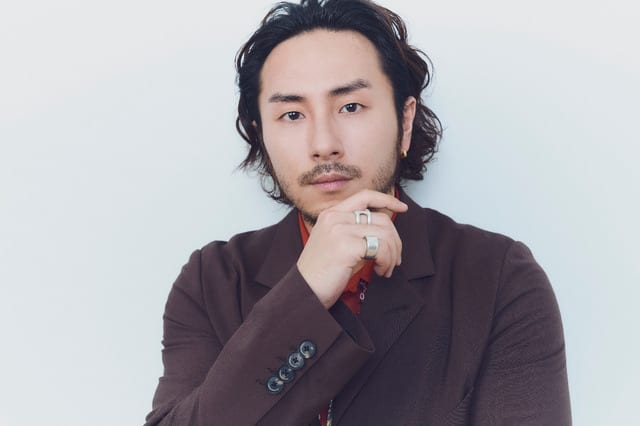
We sat down with Ryuuta Suzuki, the voice behind Tolui — fourth son of Genghis Khan, commander of the empire’s greatest military force, and a man who leads campaign after campaign into foreign lands. Tolui makes a ferocious first impression, yet as the story unfolds he reveals a warm, family-oriented side that defies simple good-versus-evil categorisation.
The Appeal of Tolui — “He Isn’t Driven by Malice”
Suzuki admitted that before taking the role, his knowledge of Mongolian history was largely limited to the Yuan invasions of Japan. Engaging with the source material changed that. “It’s not just a story of men at war,” he said. “There’s a whole community of women, layers of scheming — it has the atmosphere of a suspense drama.”
On Tolui specifically, Suzuki noted the cultural weight the character carries: in Mongolian tradition, the youngest son inherits the household, so Tolui shoulders enormous responsibility. “In the early episodes his ferocity as a military commander is front and centre. But he always has that smile — and lurking behind it is a certain coldness. That contrast is what makes him compelling.”
For Tolui’s first appearance, a Mongolian voice actor delivered the dialogue in Mongolian. Suzuki never met that actor directly; instead, he recorded his Japanese performance as a reference guide. “It’s a shame viewers can’t hear that recording, but I hope they can imagine the atmosphere,” he said with a laugh.
Asked about the jarring gap between Tolui’s early cruelty and his later warmth, Suzuki was clear: “Tolui never thinks he’s doing anything wrong. He simply went to fetch what Sorqoqtani wanted. When he comes back and finds out she asked for a book rather than jewels, he’s delighted — ‘How modest of her!’ That tells you everything about how pure-hearted he is.”
“There Are Enemies, But No Villains”
Suzuki echoed a sentiment expressed by Akira Sekine (voice of Shitara): “This series has enemies, but no true villains.” Every character acts from their own sense of justice — consorts protecting their status, Dregene and Shitara carrying the weight of past wounds. “It really feels like justice clashing with justice, not good against evil,” Suzuki said.
The character who left the deepest impression on him was Sorqoqtani, voiced by Misaki Kuno. “I’d only seen Kuno-san in cute or animal-type roles before. Hearing her play this calm, intelligent adult woman was completely fresh — I found myself respecting her more and more with every exchange.”
He also praised Sekine’s performance, singling out a scene where Shitara speaks in an almost inaudible whisper that somehow lands with full emotional weight on screen. “I genuinely couldn’t tell whether it was technique or the natural quality of her voice, but it was remarkable.”
Mongolian Culture, Animation Craft, and the Meaning of Strength
Participating in the production gave Suzuki unexpected cultural insights — from regional differences in how animals are slaughtered, to the taboo against stepping on a tent’s threshold, to the purifying role of fire. “We take our shoes off before entering a home in Japan,” he reflected. “There’s something that connects across cultures.”
On the animation, he highlighted a shot in episode one where window light reflects onto the characters rather than the characters reflecting in the glass — an inversion he found striking — and praised the realistic depiction of tears welling and falling. “This is fundamentally a drama of conversation, so the attention to human expression really matters.”
When asked what “strength” means to him, Suzuki answered without hesitation: “Someone who can set themselves aside for others. For me, that person is my mother. She worked late into the night but still did everything for me. I didn’t fully appreciate it until high school, when I realised just how strong she really is. I don’t think I could do the same — I’d probably break somewhere along the way.”
A Message to Fans
“Every character in this story lives by their own convictions within the circumstances they were born into,” Suzuki said. “I think everyone will find at least one character they can see themselves in. Pick someone and follow their journey — it opens up a whole new way to enjoy the series. As for Tolui, I hope you’ll watch the choices he makes for his family, and see how the people who inherit his wishes carry them forward.”
Tenmaku no Jaadugal — Production Information
Staff
- Original Work: Tomato Soup (serialised in Souffle, Akita Shoten)
- General Director: Naoko Yamada
- Director: Abel Gongora
- Series Composition: Kanichi Kato
- Character Design / Animation Chief: Kenichi Yoshida
- Direction Chief: Takuya Fujikura
- Art Director: Yuri Kabasawa
- Color Design: Narumi Konno
- Photography Director: Naoki Takahashi
- Editor: Kiyoshi Hirose
- Music: Koshiro Hino
- Sound Director: Noriyoshi Konuma
- Animation Studio: Science SARU
Cast
- Shitara — Akira Sekine
- Dregene — Ami Koshimizu
- Fatima — Noriko Kuwashima
- Muhammad — Jun Saito
- Ogedei — Hiro Shimono
- Tolui — Ryuuta Suzuki
- Shira — Jiu Irino
- Chagatai — Daisuke Namikawa
- Juchi — Kenji Nojima
- Sorqoqtani — Misaki Kuno
- Moge — Ayaka Asai
- Kyrgystani — Mayumi Shintani
- Borakuchin — Kujira
Theme Songs
- Opening: SEKAI NO OWARI — “Stella”
- Ending: Joō Bee — “Hoshi (星)”
 (แชร์แล้วไปกดรับที่หน้าภารกิจ · วันละ 1 次)
