
The first half of 2026 saw four anime titles from a single group dominate the conversation: the Netflix original animated film Cho Kaguya-hime!, the theatrical film Mononoke the Movie: Chapter Three — Serpent God, and two spring-season TV anime, Atelier of Witch Hat and Nihon Sankoku. All four are products of Twin Engine.
Founded in 2014 by Yamamoto Koji — the first editor-in-chief of Fuji TV’s late-night anime block “Noitamina” — Twin Engine operates as a holding company that groups nearly 20 animation studios under one roof. Its mandate spans IP development, production, promotion, and distribution, all under the motto of “create it ourselves, deliver it ourselves.” The company also partners with streaming platforms such as Netflix, sometimes bypassing the traditional production-committee model to let each studio express its own creative identity.
Cho Kaguya-hime! — Studio Colorido: Refreshing a Brand While Forging a New Path
Studio Colorido built its reputation on magic-realist films set in contemporary Japan — Penguin Highway, Nakitai Watashi wa Neko wo Kaburu, and Ame wo Tsugeru Hyoryu Danchi among them. Cho Kaguya-hime!, which became the studio’s highest-grossing film to date, points in a somewhat different direction.
Set in a near future where VR spaces are commonplace, the story follows high-schooler Sakayori Ayaha, who meets a free-spirited girl called “Kaguya” and is swept into a fun daily life of streaming games and live shows together. When Kaguya departs for the moon — echoing the Tale of the Bamboo Cutter — Ayaha is left heartbroken, yet pushes forward. Through time-slip and humanoid plot devices, the two eventually reunite.
The film departs from Colorido’s usual “return to everyday life after a brush with the extraordinary” formula: the setting is a near-future world, and Ayaha does not return to her old normal but instead pursues a path as a researcher. Yet the studio’s DNA is still present in the way Ayaha’s encounter with Kaguya moves her to rebuild her relationship with her family. The film successfully stretches the brand’s foundations into new territory.
The project’s development model — director Yamashita first helming short anime before tackling an original feature — also mirrors Twin Engine’s broader IP strategy: produce multiple short-form works, gauge audience response on social media, and grow the most promising seeds into full series.
Atelier of Witch Hat — BUG FILMS: A Milestone on the Road from Adaptation to Original
Based on Shirahama Kamome‘s manga serialised in Monthly Morning Two (Kodansha) — with cumulative sales exceeding 9 million copies — Atelier of Witch Hat was adapted into a 13-episode TV anime by Twin Engine group studio BUG FILMS. The story follows Coco, a girl who dreams of becoming a witch, as she studies magic at an atelier alongside fellow apprentices in hopes of reversing a petrification spell that has befallen her mother.
Originally scheduled for 2025, the series was pushed back to spring 2026 to allow for quality improvements. According to a studio-vision document BUG FILMS released in 2023, 2026 was meant to be a phase of “brand reinforcement through original works” — yet no original project has been announced. If the studio’s roadmap remains largely unchanged, the delay of Atelier of Witch Hat has simply shifted the entire plan back, making it likely that BUG FILMS’ next project will be an original rather than another adaptation. The completion of Atelier of Witch Hat in the first half of 2026 marks an important milestone for the studio.
Nihon Sankoku — Studio Kafka: Twin Engine’s Studios Step into the Spotlight
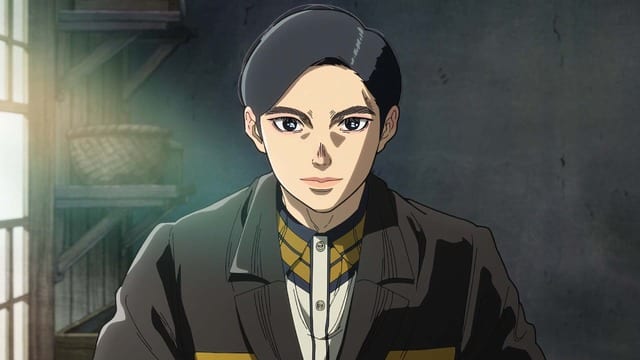
Adapted from Matsuki Ikka‘s manga serialised in Manga One (Shogakukan), Nihon Sankoku is produced by Twin Engine group studio Studio Kafka. Set in a near future where disasters and wars have rolled civilisation back to roughly the Taisho era, the political drama follows Sankaku Aoki, who uses rhetoric and cunning to rise through the ranks and pursue the reunification of a Japan split into three rival states. The series blends its heavy world-building with bursts of frank, comedic dialogue, earning it the top spot in Amazon Prime Video’s spring anime rankings.
Studio Kafka was established as a spin-off from WIT STUDIO during the production of Mahoutsukai no Yome Season 2. Excluding that series and the co-produced Mononoke the Movie, Nihon Sankoku is effectively the studio’s first fully independent original anime production.
Although Twin Engine has 17 affiliated studios, the group’s output of serialised works had not been especially large until now. The upcoming summer film THE RIBBON HERO is similarly a feature-film debut for studio Outline. With Nihon Sankoku leading the charge, Twin Engine’s in-house studios are finally stepping onto the main stage in force.
Mononoke the Movie: Chapter Three — Serpent God: Closing an Era
Twenty years have passed since the Medicine Seller first appeared as part of an episode of Ayakashi: Samurai Horror Tales in the Noitamina block. The completion of the Mononoke the Movie trilogy is therefore a landmark moment — not only for the franchise but for Twin Engine itself, which traces its origins to that very block.
Throughout its history, the Mononoke series has consistently woven in feminist themes and critiques of patriarchal structures. The theatrical trilogy deepens that social commentary, tackling the bureaucratic distortions of the Ooku (the shogun’s inner palace), restrictions on reproductive rights, institutional suppression of individuals, and the corruption of formalized tradition.
The trilogy’s completion also marks the retirement of Yamamoto Koji — Twin Engine’s representative director and the central producer behind the Mononoke series — from active producing duties. He has stated his intention to focus on mentoring the next generation. Mononoke the Movie: Chapter Three — Serpent God thus stands as a clear turning point for Twin Engine as an organisation.
Beyond Anime: Twin Engine’s Expansion into Manga and Light Novels
The changes Twin Engine is undergoing extend well beyond animation. In 2024, the company partnered with Miki Kazuma — a former Dengeki Bunko editor known for titles such as Sword Art Online — to launch the “Aniseka Novel Award,” which guarantees anime and book adaptations for winning entries. The inaugural round attracted more than 6,000 submissions.
Also in 2024, Twin Engine announced the “Twin Engine New Manga Audition”, declaring its intention to “produce and distribute manga destined for anime adaptation.” The company launched its own manga label and web manga magazine, delivering 10 works (five serialisations and five one-shots) in December 2025, with a full-scale manga business set to launch in summer 2026.
Having long combined production and creative development across its studio network, Twin Engine is now moving upstream into the creation of original source material. How far that ambition will take the group in the years ahead is something the anime world will be watching closely.
 (แชร์แล้วไปกดรับที่หน้าภารกิจ · วันละ 1 次)
