
One month into the Summer 2026 anime season, the themes and characters of each show have come into sharper focus. A recurring thread this season is stories that pay close attention to the distance between people — and the warmth that grows when characters dare to close it.
Three titles in particular stand out: they span different genres, but all are driven forward by empathy and the willingness to truly see another person. From Japanese-style horror comedy to a step-sibling home drama to a transformation-powered teen romance, here is a closer look at what makes each one worth watching.
Reiwa no Dara-san — Horror and Comedy in Perfect, Unsettling Balance
Reiwa no Dara-san is a horror-comedy set in a rural region where folk legends are still very much alive. Its central figure is Yakumatabun — known as “Dara-san” — a supernatural entity born when a shrine maiden with spiritual powers was betrayed and nearly killed by her own sister and villagers, then fused with the malevolent spirit of a giant serpent out of a desire for revenge. In the present day she is sealed on a mountain, but because her core personality is rooted in the earnest, rule-abiding shrine maiden, she is surprisingly reasonable for a monster.
The children who upend her existence are Hinata and Kaoru, siblings from the family that manages her mountain. They approach her without a trace of fear. Kaoru, in particular, compares her serpentine form to a naga from a mobile game and enthusiastically tries to get her into a cosplay outfit — leaving Dara-san thoroughly disarmed. Supporting characters include Fudeki Naomichi, Kaoru’s homeroom teacher who happens to be skilled at making costumes, and Isogo Miwa, a manga artist next door who exercises restraint despite complicated feelings. The show is careful to reveal the genuine decency beneath each character’s unsettling surface, with Dara-san’s role as a reluctant guardian making those relationships feel earned.
The present-day scenes with the siblings are genuinely funny, but the flashback sequences depicting how Dara-san came to be are uncompromisingly grim — full of violence, human cruelty, and grotesque imagery that keeps the horror credentials intact. A scene in which an occult YouTuber trespasses on the forbidden mountain and suffers a curse while Dara-san watches without lifting a finger reinforces that she remains a terrifying entity to everyone else. That tonal contrast makes the siblings’ place in her world all the more meaningful.
Uchi no Otōto-domo ga Sumimasen — The Awkward Kindness of Becoming a Family
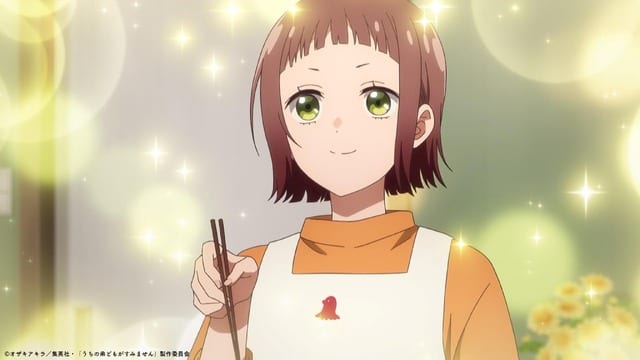
Adapted from a shoujo manga serialised in Betsuma Margaret, Uchi no Otōto-domo ga Sumimasen begins when Ito‘s mother remarries, making her the older step-sister of four brothers: Minato, Raku, Hiiragi, and Rui of the Narita family.
Having grown up without a father, Ito developed strong domestic skills to support her working mother, and she throws herself into the role of big sister with clumsy but wholehearted effort. Among the brothers, Raku and Rui accept her readily, but Minato — the eldest, who stepped up as the family’s pillar after losing his mother — struggles to make room for a sister who appeared out of nowhere.
Misunderstandings arise, but neither side ever truly rejects the other. Ito, who has always longed for a proper family, and the four brothers, still shaped by grief, share a quiet loneliness that gradually draws them together. As the family bond deepens, however, the closeness between Ito and Minato — peers in age — gives rise to feelings that neither is ready to name. Both keep redirecting those emotions under the label of “sibling affection,” which lends their scenes a palpable tension. As both a home drama and a slow-burn romantic comedy, the show manages both registers with confidence.
Otome Kaijū Caramelise — Love as the Force That Reveals Your True Self
Adapted from a manga in Monthly Comic Alive — technically not a shoujo label, though the storytelling sensibility is thoroughly shoujo — Otome Kaijū Caramelise follows Akaishi Kuroe, a high-school girl afflicted with a condition that causes her to transform into a giant monster whenever her emotions spike. To avoid exactly that, she has kept people at arm’s length her entire life.
That changes when she falls for Minami Shinta, a popular, good-looking classmate. What draws them together is mutual: Kuroe is attracted to Shinta’s ability to affirm others without judgment — including his own past self, when he was overweight — while Shinta is drawn to Kuroe’s unaffected, unmanipulative honesty. The problem is that falling in love is precisely the kind of emotional surge that triggers a full transformation, turning her feelings into a literal obstacle.
As Shinta gradually pieces together the link between Kuroe and her transformations, the show builds toward him accepting her completely — condition and all — mirroring the way she accepted his past. The supporting cast deepens the themes: Yuri Natsumi, who is in love with monsters and sees Kuroe as a “monster shrine maiden,” has been wrestling with the gulf between humans and monsters even longer than the leads. Kono Raimu, who hides a gorilla-like face under skilled makeup, represents someone who has already conquered her insecurities through effort — a parallel to both Kuroe and Shinta. The show’s exploration of uncontrollable adolescent impulses, the gap between one’s true self and one’s public image, and the courage required to accept both in yourself and others makes it one of the season’s most compelling watches.
What Unites Them
All three series feature characters who face real barriers to connecting with others, yet refuse to give up. The sight of people — and monsters — reaching toward one another with imperfect but sincere effort is, ultimately, what makes this trio of Summer 2026 titles so easy to root for.
 (แชร์แล้วไปกดรับที่หน้าภารกิจ · วันละ 1 lần)
